


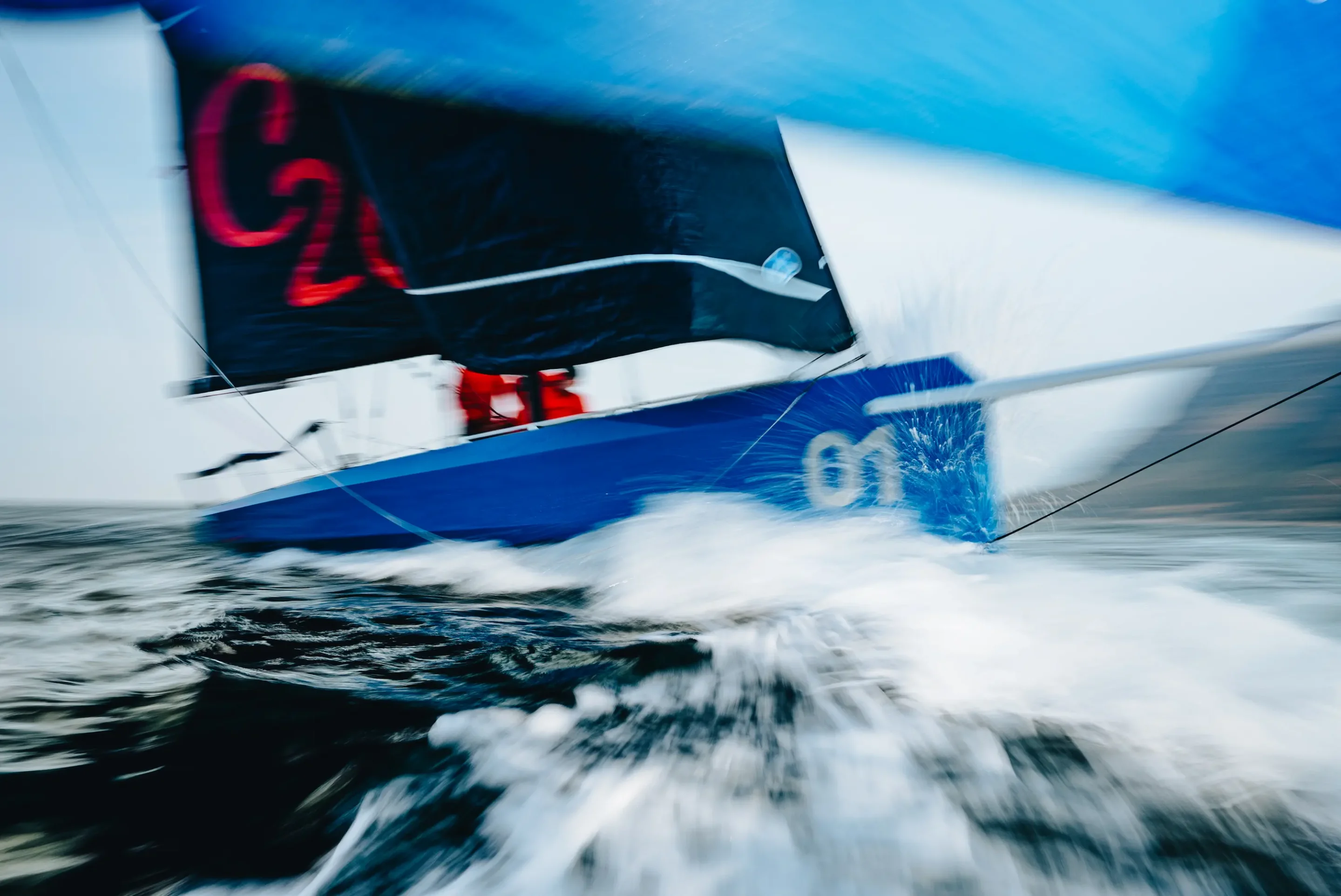
Crew
4-5 Crew
The Cape 26 races with four or five crew (up to six if all women)
Racing the Mediterranean from May 2027.
A strict one-design grand-prix racer; One design, no compromise. Cape DNA, Racing the Mediterranean from May 2027.
BUILDER
Cape Performance Sailing, Cape Town, constructor of the Cape 31.
DESIGN
Mills Design Ltd
PROOF
80+ Cape 31 built to date
RIG
Carbon mast: LightSpeed LS Photon standing rigging, One design.
The Cape 26 builds on the expertise that made the Cape 31 a global one-design benchmark. Designed by Mills Design and built by Cape Performance Sailing in Cape Town, it follows the same tooling discipline and production system. It is a grand-prix racer scaled for owner operation: light, stiff, quick to plane, and rewarding to sail well. This is not a spec sheet, but a system-by-system look at how the boat is built and how every choice ensures closely matched boats, weight equalized and with measuring certificate before leaving the factory so racing is decided by the sailors not by the boat.
Every hull is laminated in E-Glass and epoxy using the same split-mould method as the Cape 31. Moulding the boat in two halves and joining them along a controlled structural seam ensures consistent shape, stiffness and weight across the fleet.
Displacement is fixed at 950 kg, making the Cape 26 light enough to plane early and remain quick in light conditions. Before delivery, every hull is checked and measured and measuring certificate is released. In a strict one-design, racing is won by the crew, not the boat.
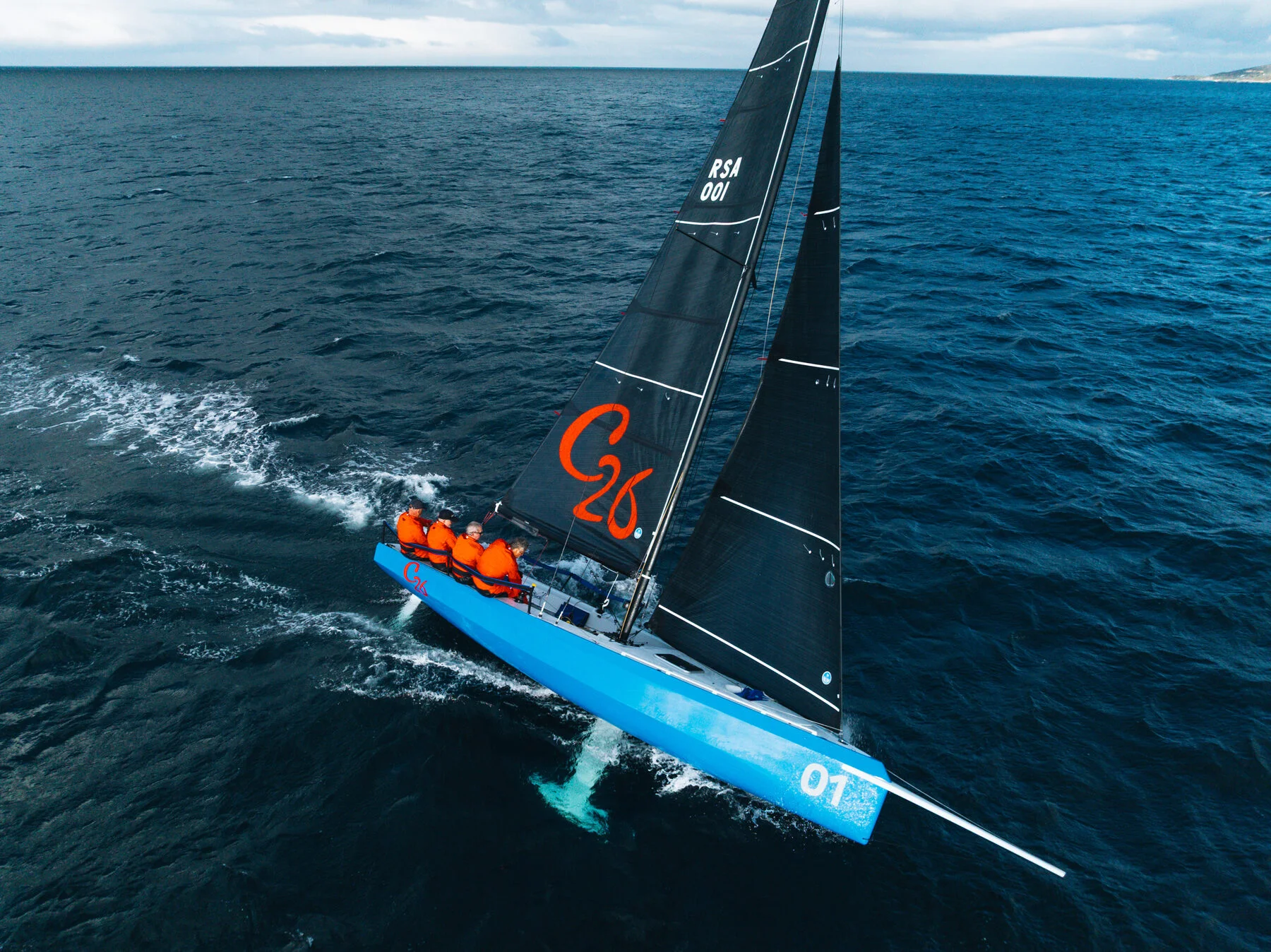
The lifting keel combines a carbon foil and lead bulb, weighing around 440 kg, and drops to a 1.90 m racing draft. This provides the righting moment and pointing ability of a larger boat, improving power and upwind performance. For launching and transport, the keel lifts to 0.40 m and the rudder lifts with it.
The result is a grand-prix configuration that remains fully trailerable between events.
A carbon mast is paired with LightSpeed LS Photon standing rigging, made from UHMWPE, Vectran and Technora with titanium-insert terminations.
Lighter and lower-stretch than rod or wire, it maintains rig shape and tune under load.
The forestay is adjustable while sailing, led aft to the trimming pod, so the rig can be powered up or depowered on the water without touching the shrouds.
A Cyclops wireless forestay sensor sends live headstay tension to Vakaros or a phone, making rig settings measurable.
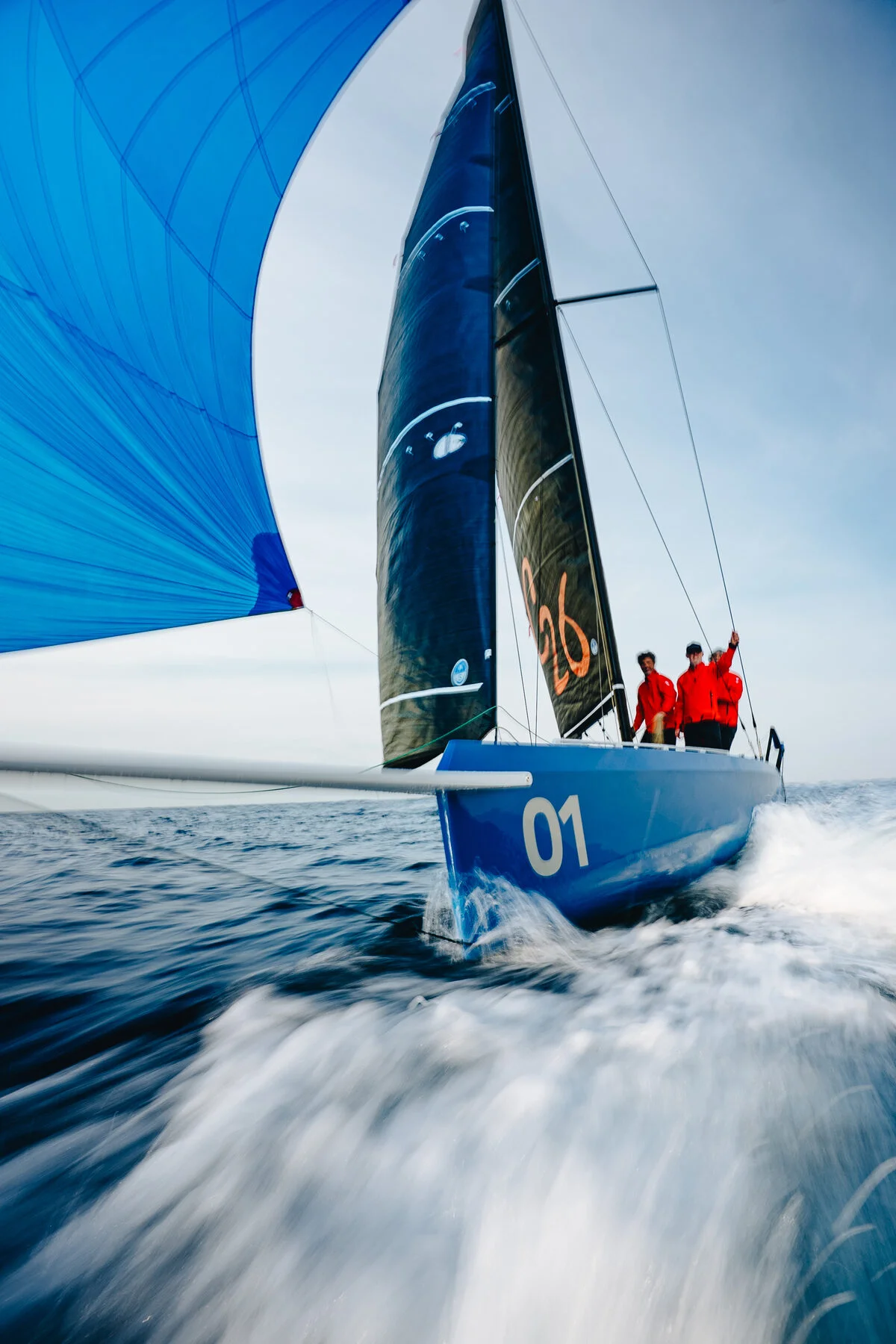
The sail plan was developed and validated with North Sails, Doyle Sails and Quantum Sails. The first sea-trial sails were North 3Di. The plan includes a 26.65 m² square-top mainsail and a fully battened headsail in two options, the 18.20 m² All Purpose Jib and the Jib 3, plus an 81.80 m² A2 spinnaker.
Mainsail and jibs are fully battened for precise shape control across the range.
Totals are 44.85 m² upwind and 108.45 m² downwind.
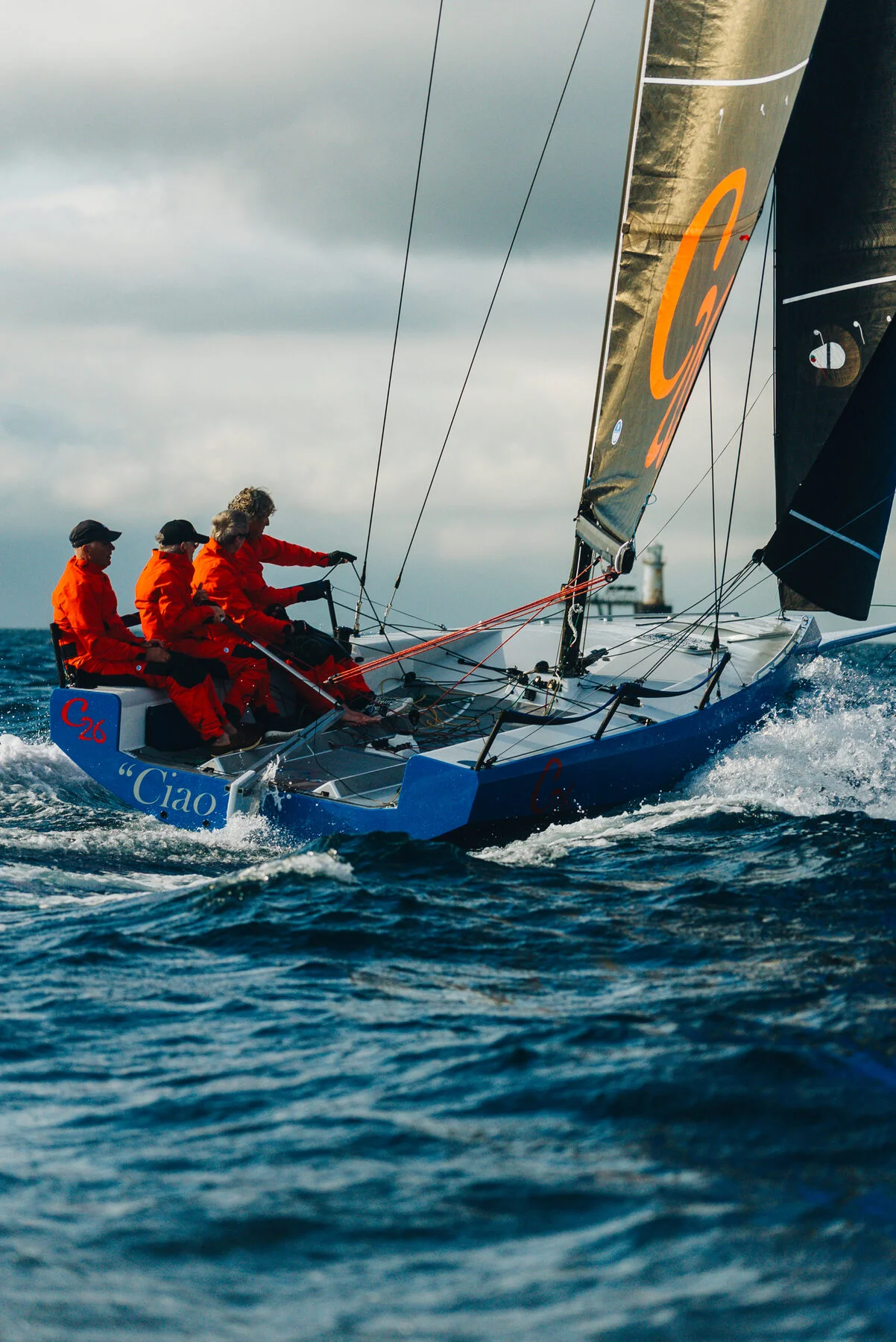
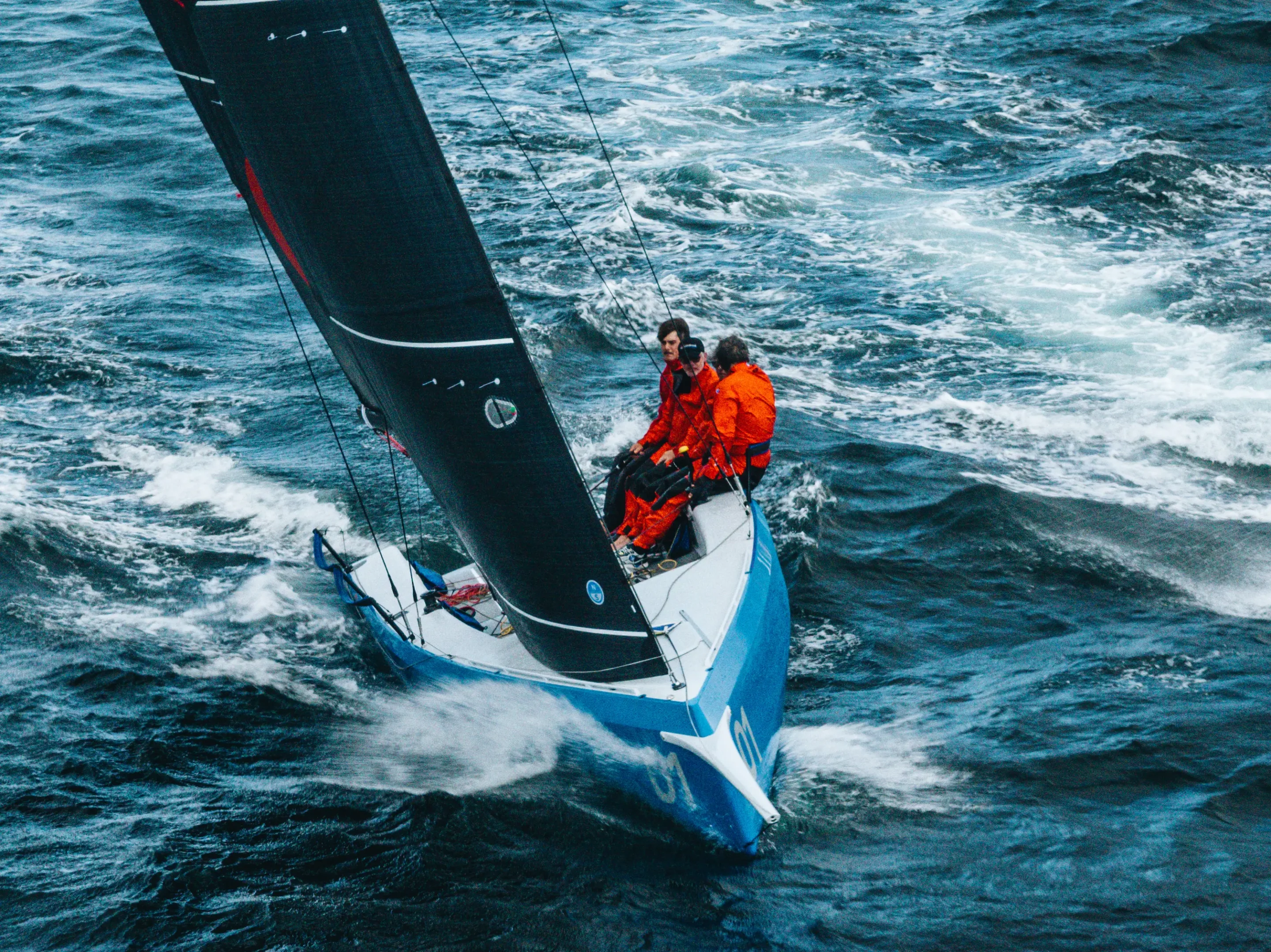
The Cape 26 is sailed by a crew of four or five (up to six if all women), inward-facing with no hiking in class racing, thanks to the “Mills Ramp Deck” a cockpit shaped for control and comfort, with control lines led to be worked hard and repeatably. For open events, optional OSR stanchions allow hiking.
Deck hardware is Harken and Allen throughout, over a painted antiskid finish.
There is no crew-weight limit.
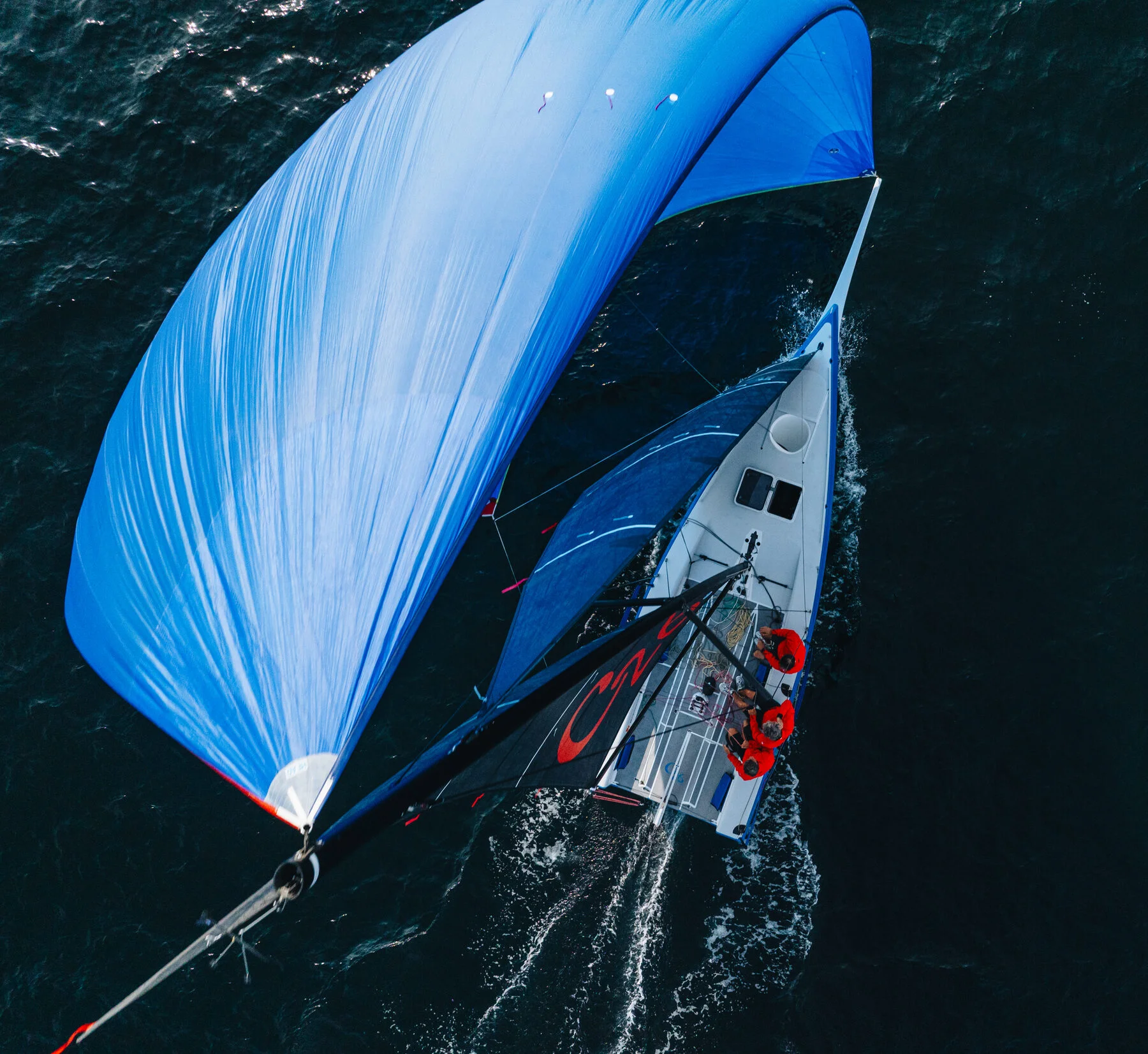
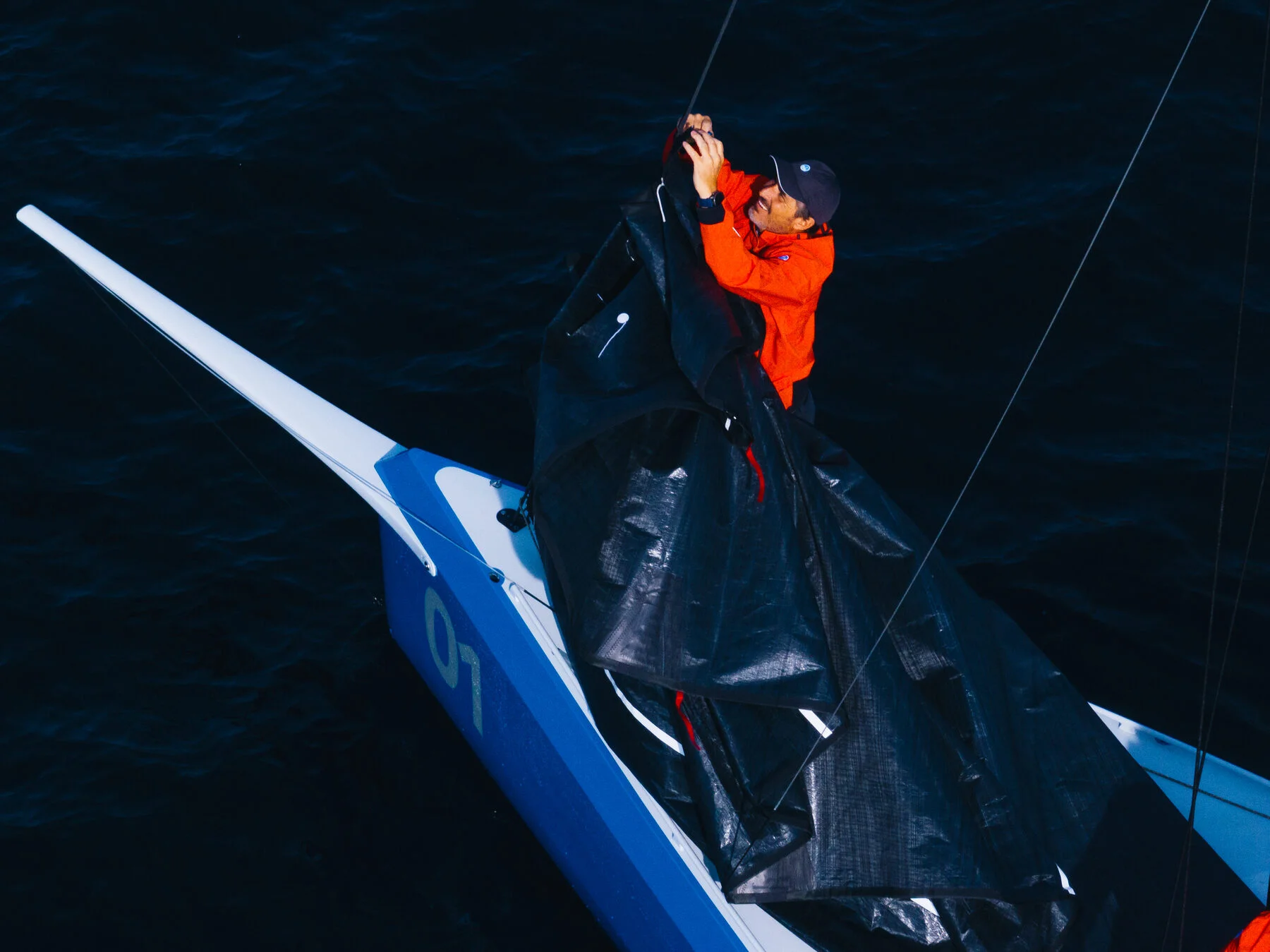
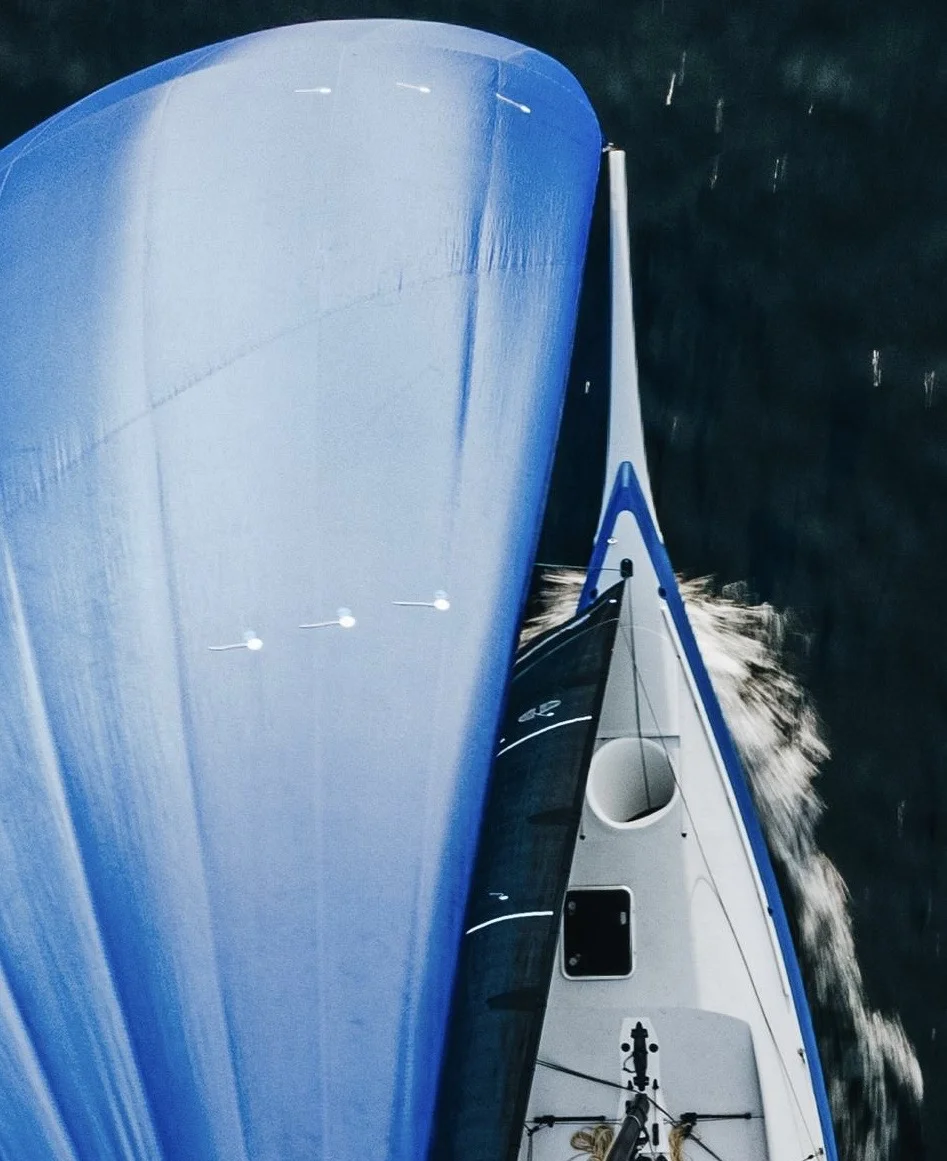
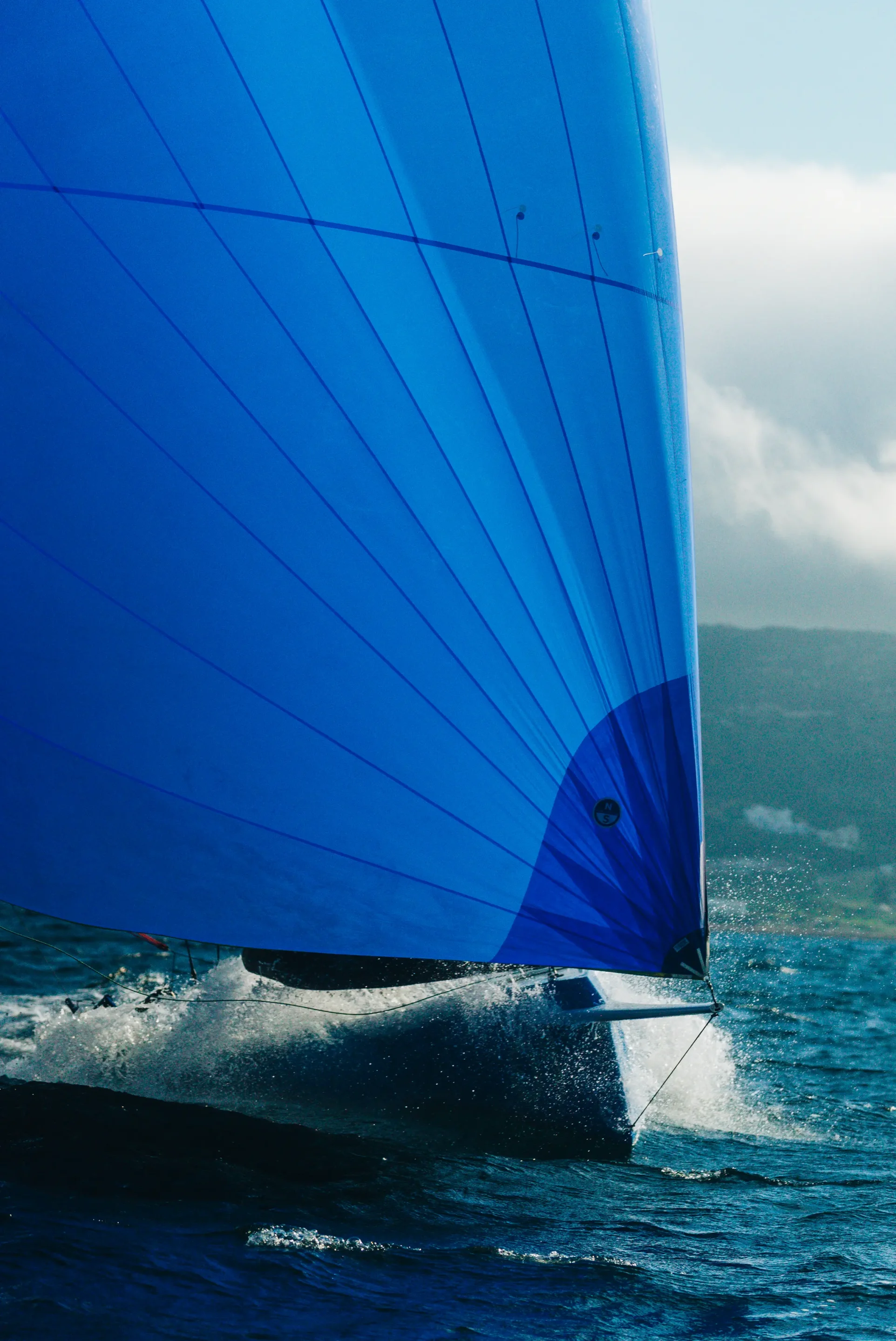
The Cape 26 launches and recovers its spinnaker through a bow launcher and below-deck chute, so the kite is hoisted and dropped without anyone leaving the cockpit.
The chute is sealed against the hull, so any water that comes down with a wet kite drains straight back out through the chute, not into the boat.
Fast, clean, repeatable hoists and drops, and a hull interior that stays dry.
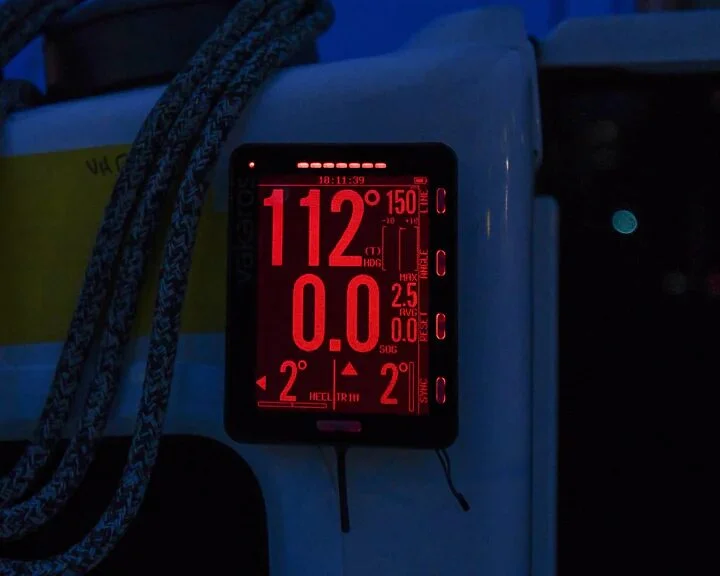
Same instruments will be standard across the fleet, combining GPS, heading, heel and start-line functions in one compact, high-accuracy unit.
Vakaros RaceSense or equivalent
A single approved system prevents an electronics arms race and gives every boat the same data language.
Paired with the Cyclops forestay sensor, every boat tunes using the same live data.
Every hull is built by Cape Performance Sailing in Cape Town, the yard behind more than 80 Cape 31s, and measured before leaving the factory. Each boat receives a measuring certificate and a Boat Plaque.
This documented chain links hull, rig to the same closed specification, ensuring every boat on the start line is genuinely comparable and the result depends on how it is sailed.
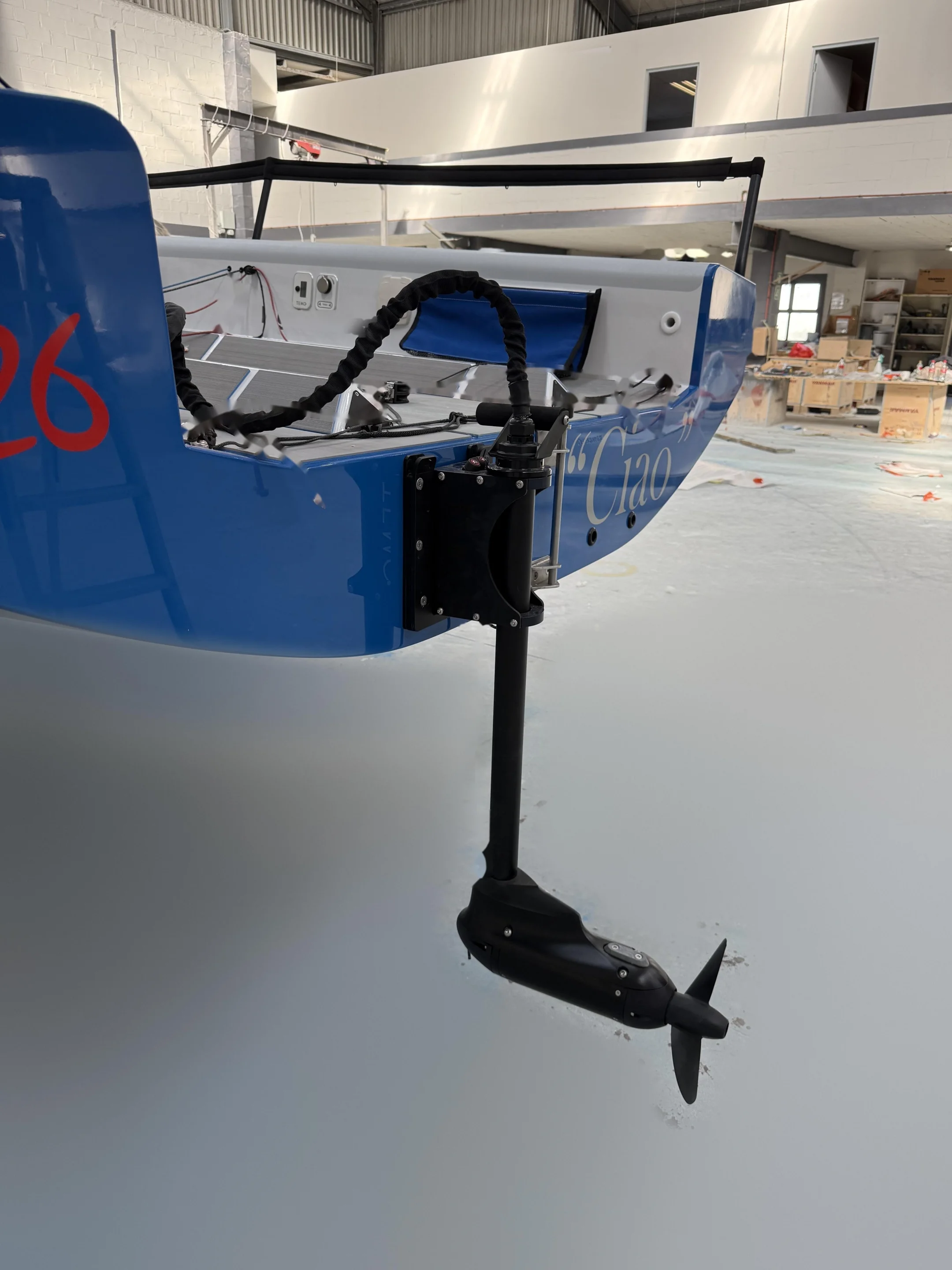
The Cape 26 uses a mandatory electric outboard with integrated battery, equivalent to a 4 hp unit, a modern solution matched to current marina rules and to the practical needs of a racing programme. Only the leg is positioned at the transom, and when not in use it stows on a second bracket identical to the transom one, mounted inside the hatch, so the unit is put away without anyone going below deck.
Racing the Mediterranean from May 2027.
Measurement certificate:
First sea trials
False Bay, Cape Town - June 2026
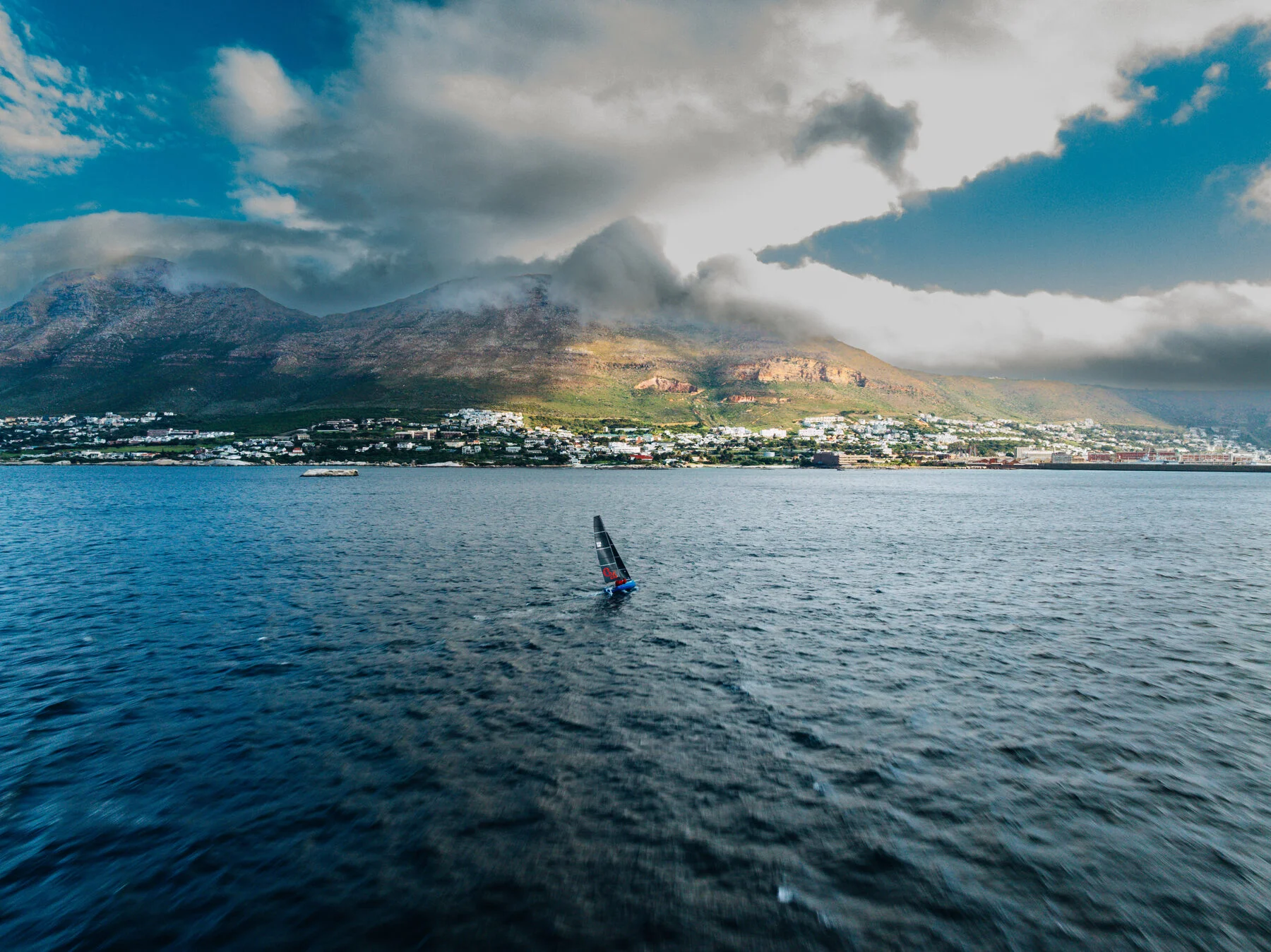
The first Cape 26 completed her sea trials in False Bay with Cape Performance Sailing, North Sails Cape Town, Negrinautica and the first European owners. Across a wide wind range, she reached her design polars with ease, proving fast, responsive and well balanced.
Light-air performance exceeded expectations, while in stronger breeze she remained stiff, powerful and confidence-inspiring, even with the crew inboard.
“Fast, responsive, and exciting to sail.”
One design & rules
The rules exist to keep the racing decided on the water - closely comparable boats, transparent equipment, a level playing field for owner-drivers and professionals alike.
Crew
The Cape 26 races with four or five crew (up to six if all women)
Open division
Owner driver or a non professional approved by the class can helm. The rest of the crew is open.
Electronics
The class allows a single race electronics system, Vakaros RaceSense or equivalent, covering starting, timing and basic navigation. More complex integrated instrument packages are not permitted.
Upwind Sails
Black membrane fully battened mainsail and two fully battened jibs, All Purpose and Jib 3, called by the Race Committee based on the wind.
Downwind sailing
Sealed chute and retriever line take the 81.80m2 gennaker below deck in one continuous action, with water draining back out through the chute, keeping the hull interior dry
Measurement
Weight and key measurements are checked on every hull before it leaves the yard, each boat is brought to class minimum weight, and the measured values are recorded on the boat’s measurement certificate.
2027 season
Five stops, one fleet, one cumulative title: the competitive backbone of the class, built with the clubs that already know how to run grand-prix one-design racing.
Garda Lake
Lake Garda, Italy
20 - 22 May
Scarlino
Tuscany, Italy
24 - 26 June
Yacht Club Cala dei Sardi
San Pantaleo, Sardinia, Italy
15 - 17 / 23 - 25 July
Porto Cervo - YCCS
Sardinia, Italy
17 - 19 September
Bonifacio
Corsica, France
14 - 16 October
Governance
The Association ensures every Cape 26 competes to the same standard. It governs the Class Rules, measurement, certification and international racing calendar.
Its membership gives owners, charterers and partners defined roles while supporting fair, consistent growth across territories.
Full members
Cape 26 owners with a valid measurement certificate; voting rights at the General Assembly
Associate members
Charterers and crew associated with a registered Cape 26
Sponsoring members
Partners providing products, services or sponsorship
National class associations
Recognised territory by territory as the fleet grows
Certification systems
Every hull carries a Boat Plaque and Sail Royalty Label under the certification system.
Partners
Builder

Naval Architect

European Distributor

Media


Rigging
Spars

Deck Hardware

Deck Hardware

Trailer
Europe
Negrinautica
European Distributor, Milan
contact: Pietro Negri
pietro.negri@negrinautica.com
United Kingdom
David Swete
UK Distributor
David Swete
dave@racingyachts.com
World / South Africa
Cape Performance Sailing
Builder, Cape Town
Davey James
davey@capeperformancesailing.com
United States
Coming soon
Australia
Coming soon